When planning to sell your HDB flat, one of the most confusing topics for homeowners is valuation vs. selling price. Many sellers assume both are the same, but in reality, they can differ significantly, and understanding this difference is critical for making the right financial decisions.
In Singapore’s property market, especially under the rules of the Housing & Development Board, knowing how pricing works can help you avoid costly mistakes and negotiate with confidence.
What Does Valuation vs Selling Price Mean?
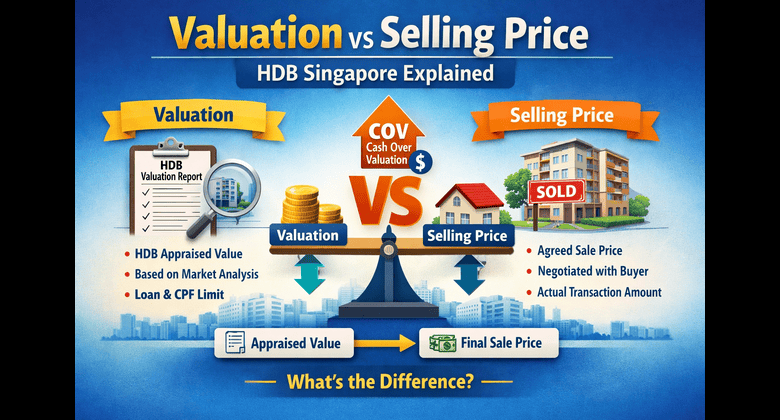
The concept of Valuation vs selling price refers to the difference between the official market valuation of your HDB flat and the actual price a buyer is willing to pay.
- Valuation: This is the estimated market value of your flat, assessed by HDB-appointed valuers after a buyer grants an Option to Purchase (OTP).
- Selling Price: This is the final agreed price between you and the buyer.
In simple terms, valuation is a professional estimate, while the selling price reflects real market demand.
Why Valuation and Selling Price Are Not the Same
Understanding Market valuation vs sale price is important because property prices are influenced by more than just technical valuation.
Several factors can push the selling price higher or lower than valuation:
- Strong demand in your area
- Proximity to MRT stations, schools, or amenities
- Renovation quality and interior condition
- Floor level and unit facing
For example, a well-renovated flat in a prime location may sell above valuation because buyers are willing to pay more for convenience and aesthetics.
What Is Cash Over Valuation (COV)?
A key concept linked to Market value vs selling price is Cash Over Valuation (COV).
- If selling price > valuation → Buyer pays the difference in cash (COV)
- If selling price = valuation → No COV involved
- If selling price < valuation → Buyer gets a better deal
COV must be paid in cash and cannot be covered by CPF or loans, which is why it plays a major role in negotiations.
How HDB Valuation Is Determined
To fully understand Market value vs selling price, you need to know how valuation is calculated.
HDB valuers consider:
- Recent transaction prices of similar flats
- Location and accessibility
- Remaining lease
- Size and layout
- Market conditions
The valuation is only issued after the OTP is granted, which means sellers and buyers must agree on a price before knowing the official valuation.
How to Price Your HDB Flat Correctly
Pricing your flat correctly is where the appraised value vs. the sale price becomes practical.
Here’s how you can do it:
- Check recent transactions in your area
- Compare similar unit types and sizes
- Factor in your flat’s condition and upgrades
- Avoid overpricing, which can delay your sale
Overpricing may lead to fewer viewings, while underpricing could result in financial loss. A balanced approach ensures faster and smoother transactions.
Impact on Buyers and Financing
The difference between valuation and selling price directly affects buyers.
If there is a high COV:
- Buyers need more upfront cash
- Loan amount is limited to the valuation, not the selling price
- Some buyers may back out due to affordability issues
Additionally, buyers must pay stamp duties to the Inland Revenue Authority of Singapore based on the higher of the valuation or selling price.
This makes the pricing strategy even more important for sellers.
Common Mistakes Sellers Make
Many homeowners misunderstand valuation vs. selling price, which leads to avoidable mistakes:
- Assuming valuation equals market price
- Setting unrealistic expectations based on neighbors’ sales
- Ignoring current market demand
- Not preparing for negotiation
These mistakes can result in longer selling times or failed transactions.
Strategies to Maximize Your Selling Price
If you want to benefit from Valuation vs selling price, you need a smart selling strategy.
Here are proven tips:
- Stage your home well to attract buyers
- Highlight key features like renovations or views
- Market your listing effectively with quality photos
- Time the market when demand is strong
A well-presented flat can often command a price above valuation.
When Selling Price Falls Below Valuation
While most sellers aim for higher prices, sometimes valuation vs. selling price works the other way.
Reasons include:
- Weak market conditions
- Urgent sale requirements
- Poor unit condition
- Unfavorable location
In such cases, pricing slightly below valuation may help secure faster deals.
Conclusion
Grasping the difference in valuation vs selling price is crucial for any HDB owner preparing to sell in Singapore. It allows you to set a realistic asking price, handle negotiations with confidence, and minimize unexpected issues during the process.
Selling your HDB flat goes beyond simply putting a number on your listing. It requires a clear understanding of market trends, buyer expectations, and your own financial situation. When all these elements are aligned, the selling journey becomes smoother and more rewarding.
If you are planning to sell in the near future, begin by studying recent market transactions, evaluating your finances, and adjusting your expectations based on current demand. With a well-planned approach, you can secure a successful deal and maximize the value of your property. Want to save the trouble and be ahead of others? Work with me to get exclusive valuation and selling price for your property.